
In commercial real estate, the transition toward net-zero emissions has moved beyond a peripheral corporate social responsibility goal to become a fundamental determinant of asset liquidity and market valuation. Historically, financial appraisal, technical building upgrades, and regulatory governance have been treated as separate silos. However, recent research published in the International Journal of Strategic Property Management demonstrates that aligning physical building performance with environmental, social, and governance (ESG)-linked capital is now essential to protecting and growing portfolio value.
Drawing on a systematic review of 74 studies by El Jaouhari et al. (2026), it becomes clear that green investment strategies are no longer about defensive compliance. Instead, they represent a new sustainable paradigm where carbon reduction directly translates into measurable financial returns.
The Valuation Shift: Green Premiums vs. Structural Barriers
For institutional investors and property owners, the economic case for decarbonization is anchored by five core clusters of market drivers, led prominently by the green premium. High-performing, low-carbon buildings increasingly command higher rental yields, lower vacancy rates, stronger tenant retention, and superior exit valuations compared to unretrofitted “brown” assets facing obsolescence.
Yet, bridging the gap between green capital and physical execution remains complex. The research identifies eight clusters of structural barriers that frequently stall decarbonization initiatives—most notably the classic split-incentive problem, where landlords bear the upfront capital expenditure (CapEx) for energy upgrades while tenants capture the operational expenditure (OpEx) savings. Overcoming these market failures requires moving past isolated upgrades toward an integrated business model.
Five Transition Pathways to Value Creation
To turn sustainability into a tangible financial asset, real estate decision-makers must execute across five interconnected transition pathways:
Technological Adoption: Deploying smart building management systems, IoT sensors, and data-driven energy analytics to optimize operational efficiency and provide verifiable ESG reporting for lenders and investors.
Deep Retrofits: Moving beyond cosmetic efficiency tweaks to comprehensive building envelope upgrades, electrification, and onsite renewable integration that future-proof existing stock against tightening energy standards.
Life-Cycle Carbon Management: Evaluating both operational carbon and embodied carbon across the entire lifespan of an asset—from raw material extraction and green procurement during construction to end-of-life deconstruction.
Circular Economy Practices: Designing buildings as material banks by prioritizing reusable components, low-carbon construction materials, and waste minimization to reduce long-term resource risk and enhance residual asset value.
Stakeholder Engagement: Aligning incentives across the value chain—using mechanisms such as green leases, collaborative supply chain contracting, and transparent tenant-landlord data sharing—to resolve the split-incentive bottleneck.
Real-World Cases in Practice Across Six Asset Classes
Across Europe in 2026, leading asset managers, operators, and public-sector facilitators are proving how these five transition pathways translate directly into resilient valuations across distinct property sectors:
1. Residential: Existing Multifamily Brown-to-Green Retrofit (Bilthoven, The Netherlands)
In April 2026, Achmea Real Estate executed the first investment for its Achmea Dutch Residential Impact Fund (ADRIF): acquiring two 1976-built residential complexes comprising 128 rental apartments in Bilthoven (Spreeuwlaan and Kramsvogellaan), which it will upgrade in partnership with construction firm BAM Wonen.
Deep Retrofits & Paris-Proof Pathway: Rather than demolishing dated 1970s housing, Achmea is systematically upgrading the complexes from Energy Label D to A/A+ and progressing toward Paris-Proof performance alongside upgrading an additional 400–500 existing portfolio homes in 2026 held in existing portfolios.
Technological Adoption & CRREM Underwriting: Using dynamic portfolio roadmaps and granular energy data (recognized with the Data to Impact Award in June 2026), Achmea benchmarks every residential asset against 1.5°C CRREM decarbonization pathways.
Stakeholder Alignment: Co-designing the renovation with tenants and BAM Wonen the apartments provide a better and healthier living environment, it reduces residents’ total energy and housing costs while protecting institutional cash flows and valuation liquidity.
2. Office: Repositioning of Campus Eschborn (Germany)
Frankfurt-based investment manager Arminius Kapitalgesellschaft mbH illustrates how data-driven ESG scoring and green procurement transform older suburban office stock into resilient multi-tenant assets at the 32,000 sqm Campus Eschborn (acquired alongside HANSAINVEST):
Technological Adoption: Applying its proprietary, award-winning 154-criteria ESG scoring model (aligned with the EU Taxonomy and the 1.5°C climate target) alongside Building Information Management (BIM) to benchmark baseline performance against a targeted “potential score” and price CapEx upgrades directly into acquisition and business plans.
Deep Retrofits & Circular Economy Practices: Preserving existing building structures while executing targeted technical upgrades, flexible low-waste tenant fit-outs, and ecological green terraces that mitigate heat-island effects and enhance local biodiversity.
Life-Cycle Carbon Management & Stakeholder Engagement: Partnering with Westbridge Advisory in March 2026 to restructure electricity procurement across commercial sub-portfolio operations to 100% certified German green electricity – cutting tenant OpEx and avoiding an estimated 1,560 tonnes of CO₂ by 2029 – while securing long-term corporate leases (including Zühlke Engineering, Kia Deutschland, and Management Circle AG) and achieving full occupancy at Düsseldorfer Straße 38 in August 2026.
3. Retail: Net-Zero Retail Parks & Project Solar (Europe)
In retail real estate—where single-story retail boxes and large parking footprints create significant decarbonization potential without altering the asset’s commercial use—pan-European specialist Redevco demonstrates how operational carbon reduction directly underpins institutional fund demand across over 190 convenience-led retail parks (€5.5 billion portfolio) and its SFDR Article 8 European Retail Parks Evergreen fund launched in October 2026:
Technological Adoption & Carbon Pricing: Tracking granular energy data across over 90% of its portfolio via Deepki while applying an internal shadow carbon price of €120 per tonne of CO₂ directly into acquisition and CapEx valuation models.
Deep Retrofits & Onsite Renewables (Project Solar): Installing large-scale solar arrays across retail park roofs and carpark canopies (reaching 16.3 MWp installed and cutting like-for-like portfolio emissions by 45%) to align essential retail properties with SBTi-validated 1.5°C CRREM pathways.
Life-Cycle Carbon, Circularity & Green Leases: Enforcing Sustainable Design Briefs that cap upfront embodied carbon (averaging 287 kg CO₂e/m², well below its 500 kg benchmark), integrating biodiversity across retail park grounds, and partnering with grocery and essential retail anchors through green leases and onsite clean power agreements.
4. Logistics:Electrification of the Bornem Campus (Belgium)
.In industrial and logistics real estate, where grid capacity and energy costs increasingly dictate prime asset liquidity, Benelux warehouse investor WDP and occupier DHL Supply Chain co-developed a full-scale decarbonization retrofit across a 120,000 sqm logistics campus in Bornem:
Technological Adoption: Preceded by an extensive engineering system study and granular thermal load modeling, establishing a scalable technical blueprint for electrifying large-scale European warehouse assets.
Deep Retrofits & Onsite Renewables: Decommissioning legacy gas-fired heating systems across the entire 120,000 sqm facility and installing a centralized, electrified R290 (propane) heat pump system and hot-water air heaters powered by onsite solar electricity.
Life-Cycle Carbon & Circularity: Replacing synthetic refrigerants with natural R290 cuts Global Warming Potential (GWP) from 675 to just 3, eliminating stranded-asset exposure under tightening EU F-gas regulations while extending the operational lifespan of existing warehouse infrastructure.
Stakeholder Engagement: Co-developing the retrofit as a joint landlord-occupier initiative that resolves the logistics split-incentive barrier—translating green CapEx directly into lower heating bills, verified Scope 1–3 emissions reductions, and long-term lease durability.
5. Educational & Social Infrastructure: “Paris-Proof” & Circular Schools (The Netherlands)
Public real estate faces the exact same valuation pressure: over 60% of the Netherlands’ 12,000 school buildings date from 1950–1990 and risk obsolescence under tightening EPBD IV and MPG life-cycle rules. Supported by national knowledge and implementation organization Ruimte-OK, Dutch educational real estate demonstrates two complementary value-creation models:
Circular Renovation & Portfolio Roadmapping: Deep circular renovation projects (such as De Zevensprong in Best, championed by Stichting Mevrouw Meijer) preserve existing structural frames while upgrading thermal envelopes and electrifying HVAC—cutting whole-life CO₂ emissions by 30–50% and CapEx by 10–30% compared to demolition and new build. To scale this transition across the sector, the Primary Education Council (PO-Raad), Secondary Education Council (VO-raad), and Association of Netherlands Municipalities (VNG) published the sectoral roadmap and established the Sustainable School Buildings Program. Ruimte-OK, launched the Portfolio Roadmap tool in September 2026 to help school boards and municipalities map 2050 decarbonization pathways while navigating the Sustainable Social Real Estate Subsidy Scheme (DUMAVA subsidy scheme) and local electricity grid congestion.
Scalable Procurement & Financial Alignment: Aligning with Ruimte-OK’s Innovatieprogramma Onderwijshuisvesting (IPOHV), Amsterdam’s multi-school procurement program (De Elementaire School, including IPS Strandeiland) delivers Nul-op-de-Meter and Paris-Proof schools built with demountable, low-embodied-carbon materials. Complementing this, Invest-NL launched a nationwide framework in September 2026 uniting 27 financial, procurement, and governance tools to resolve municipal and school-board split incentives.
6. Asset Conversion: Office-to-Housing Transformation in Haarlem (The Netherlands)
Finally, cross-sector adaptive reuse shows how stranded commercial assets can be converted into high-performing residential investments. Highlighted by INREV, Catella Investment Management acquired an obsolete, stranded office building in Haarlem and executed a brown-to-green transformation into 162 sustainable apartments:
Circular Economy & Embodied Carbon: By retaining and reusing the existing concrete structural frame rather than demolishing and rebuilding from scratch, Catella substantially reduced embodied carbon emissions and construction waste.
Deep Retrofit & Onsite Renewables: Overhauling the thermal envelope and installing geothermal heating paired with onsite renewable energy—covering over 50% of building energy demand—elevated the asset to an A+++ energy label.
Commercial & Social Stakeholder Alignment: Combining top-tier environmental performance with a balanced mix of social (15%), mid-market affordable (40%), and free-sector (45%) rental units alongside shared resident amenities eliminated regulatory obsolescence risk while securing resilient, institutional-grade cash flows.
Strategic Implications for Investors and Developers
Whether managing multi-tenant offices, convenience retail parks, logistics sheds, public school portfolios, or residential conversions, the lesson from 2026 research and market execution is clear. As policy landscapes tighten around mandatory building performance standards and sustainable procurement, unaligned properties face escalating regulatory and stranded-asset risks. Conversely, investors, developers, and asset managers who embed these five transition pathways into their core valuation models unlock access to green finance, lower their cost of capital, and build resilient portfolios capable of outperforming across market cycles.
Decarbonization is no longer an external cost imposed on real estate; it is the primary mechanism through which next-generation property value is created.
#RealEstate #Sustainability #GreenFinance #Decarbonization #ValueCreation #AssetManagement #ESG
Norbert Bol
Literature
El Jaouhari, A., Samadhiya, A., Kumar, A., Rącka, I., Trinkūnas, V., & Kazancoglu, Y. (2026). Decarbonization strategy and green investment in the real estate: Toward a new sustainable paradigm. International Journal of Strategic Property Management, 30(2), 180-209.
Photo
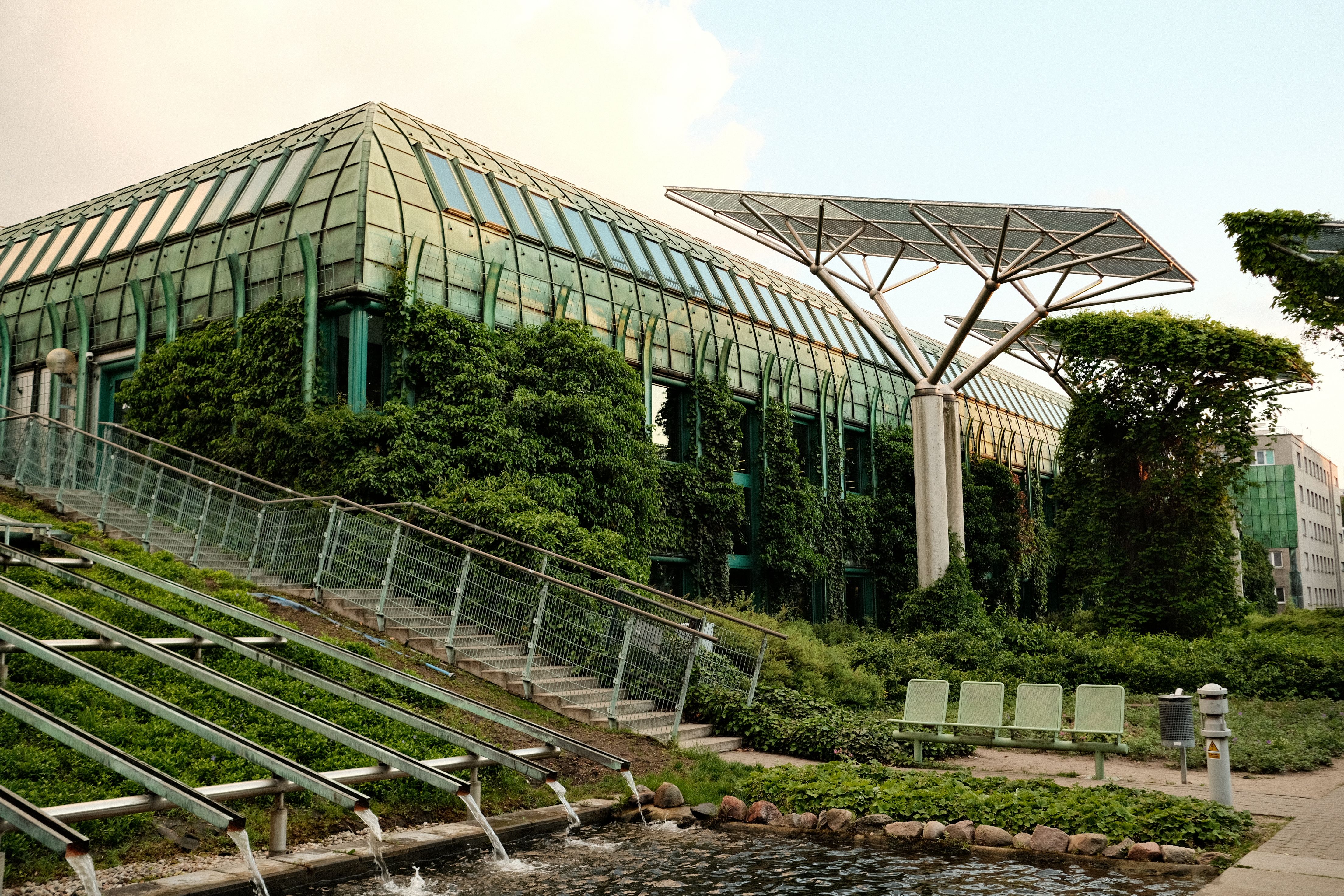
Photo by Krystian B from Pexels: https://www.pexels.com/photo/modern-green-building-with-solar-panels-and-greenery-37731380/ (Munich, Germany).

